

Need Help? Frequently asked questions
Saunas FAQs
Sauna FAQs
Sauna Types and Technology
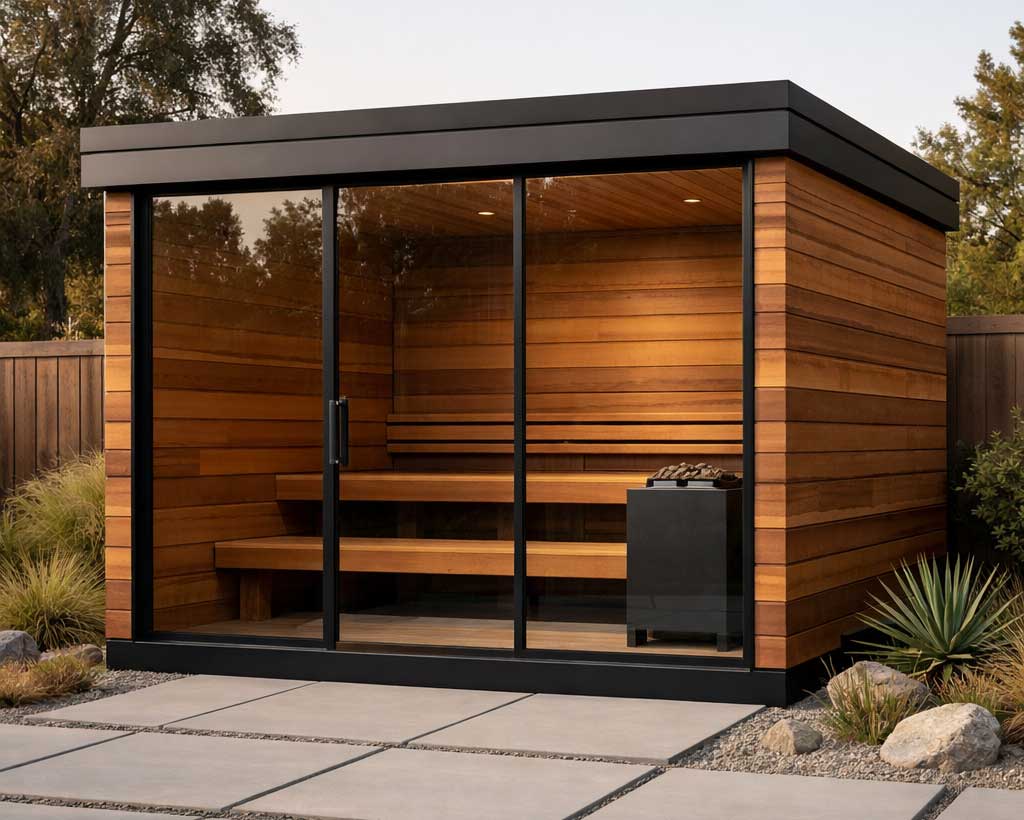
We offer Traditional (Finnish-style), Infrared, and Hybrid saunas.
Traditional saunas use a heater and sauna stones to heat the air. Water can be poured over the stones to create steam (löyly). Infrared saunas use radiant heat panels that warm the body directly at lower air temperatures. Hybrid saunas combine both technologies in one system.
Each model is engineered for residential performance, durability, and architectural integration.
Traditional saunas heat the air to high temperatures (typically 170 to 195°F) and allow steam to be created. The experience is intense and immersive.
Infrared saunas operate at lower air temperatures (120 to 150°F) and use radiant heat to warm the body directly.
Hybrid systems allow you to alternate between both experiences.
Traditional saunas typically operate between 170°F and 195°F, depending on heater size and ventilation.
Traditional: approximately 30 to 45 minutes
Infrared: approximately 10 to 20 minutes
Warm-up time depends on model size and ambient conditions.
Many clients sauna 3 to 5 times per week. Some use it daily.
If you have cardiovascular conditions, are pregnant, or have medical concerns, consult your physician before regular use.
Sauna Installation and Electrical
Yes. Common indoor locations include home gyms, basements, bathrooms, and garage conversions.
Proper ventilation and electrical access are required.
Yes. Many models are designed specifically for outdoor residential installation.
Outdoor installation requires:
- A flat, level foundation (concrete pad, pavers, or reinforced deck)
- Electrical access
- Weather-conscious placement
Most traditional and hybrid saunas require:
- 240V dedicated circuit
- Hardwired connection
- Installation by a licensed electrician
Exact specifications vary by heater size.
Smaller infrared units may operate on 120V. Larger models may require 240V.
Final electrical requirements are confirmed before shipment.
Permit requirements vary by municipality. Electrical work often requires permitting.
We recommend checking with your local building department.
Sauna Shipping
In-stock units: typically 2 to 4 weeks
Made-to-order units: typically 6 to 12 weeks
Lead times vary by manufacturer and season.
Most units ship via freight carrier and arrive curbside.
White glove delivery and installation may be available in select regions.
Contact: support@forgerecoverygroup.com
760.840.5141
- Wipe benches periodically
- Allow ventilation after each session
- Avoid harsh chemical cleaners
- Light sanding may be required over time
Need Help? Frequently asked questions
Hot Tub FAQs
SIZING & SEATING
Capacity varies by model, from compact two-person tubs to larger models seating six or more. Review each product's dimensions and seating layout before choosing.
Consider the number of users, available footprint, access path, and room needed around the tub for service and safety.
JETS & HYDROTHERAPY
Jet count and configuration vary by model, generally scaling with tub size. Larger models include additional jet zones such as a foot dome or dedicated neck jets. Exact jet counts and types are listed on each product page.
Warm water immersion combined with directed jet flow is commonly used as part of a recovery routine after training or a long day. Jet placement varies by model, with larger tubs adding zones such as a foot dome, neck jets, or shoulder jets.
The information presented on this page is for general wellness and educational purposes only. Statements regarding these products have not been evaluated by the Food and Drug Administration. These products do not intend to diagnose, treat, cure, or prevent any disease. Consult a qualified healthcare provider before beginning any new wellness routine, especially if you are pregnant, nursing, or have a pre-existing medical condition.
Individual jets are adjustable on most models, and tubs with multiple pumps allow flow to be directed between seating zones. Jet pumps run on demand when activated rather than continuously. Filtration runs separately on a programmable schedule.
INSTALLATION & ELECTRICAL
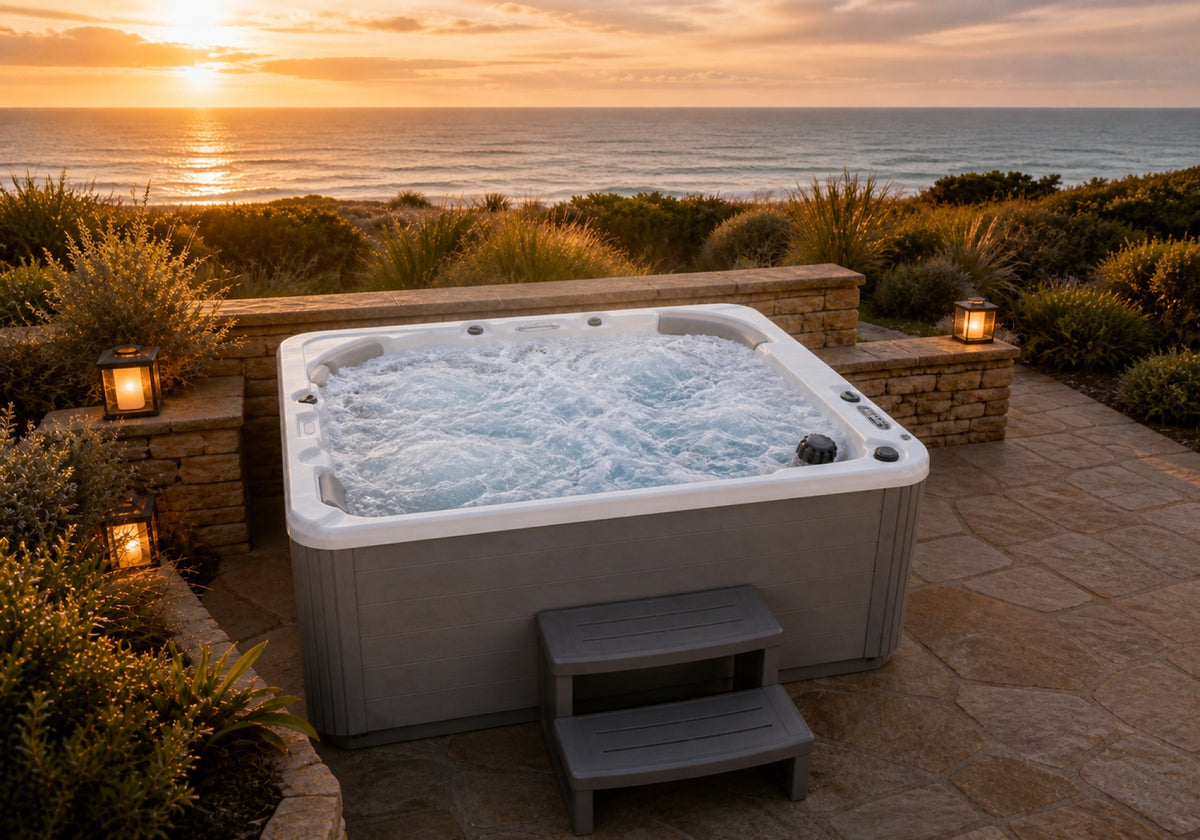
Most models are designed for outdoor installation. If you are considering an indoor placement, contact us first to confirm ventilation, drainage, and structural requirements for your specific model.
Yes. Outdoor installation requires a flat, level, and adequately reinforced surface, typically a concrete pad or a deck rated for the tub's filled weight. Electrical access and weather-conscious placement are also required. Confirm load capacity with a contractor if installing on a deck.
Every hot tub we carry is a 220V system requiring a dedicated, hardwired circuit installed by a licensed electrician. None of these models run on a standard household outlet. Breaker size and exact requirements vary by model and pump configuration, so confirm your model's electrical specifications before scheduling installation.
Permit requirements vary by municipality, and electrical work often requires permitting. Check with your local building department before installation.
WATER CARE & MAINTENANCE
Storm Series models include a Smart Water Sanitation System with corona discharge ozone and a minerals water treatment inline feeder as standard equipment. Lonestar Series models include a corona discharge ozone system as standard, with the minerals inline feeder available as an option. Ozone reduces how much sanitizer your water needs. It does not replace sanitizer entirely, and you will still maintain a sanitizer as part of routine water care.
Most owners change hot tub water every 3 to 4 months, depending on usage and sanitation system. Heavier use may require more frequent changes.
Routine maintenance includes regular filtration cycles, sanitizer use, and periodic filter cleaning or replacement. Frequency depends on how often the tub is used and on local water conditions.
BUILD & CERTIFICATIONS
Storm Series and Lonestar Series models are certified to CEC, UL 1563, CSA C22.2 #218.1, and ANSI-APSP-ICC-14-2019 standards. Our hot tubs are manufactured and assembled in Texas using American made components. If your electrician or building department needs certification documentation for permitting, contact us and we'll provide it.
Materials and construction vary by model. Review the product specifications for shell, cabinet, insulation, and safety details.
SHIPPING & DELIVERY
Most hot tubs ship by freight to the curbside. Confirm access and delivery requirements before ordering.
WARRANTY
Coverage varies by manufacturer and component. Review the applicable warranty terms for coverage periods, exclusions, and registration requirements.
Need help? Frequently asked questions
Cold Plunge FAQs
Cold Plunge Performance
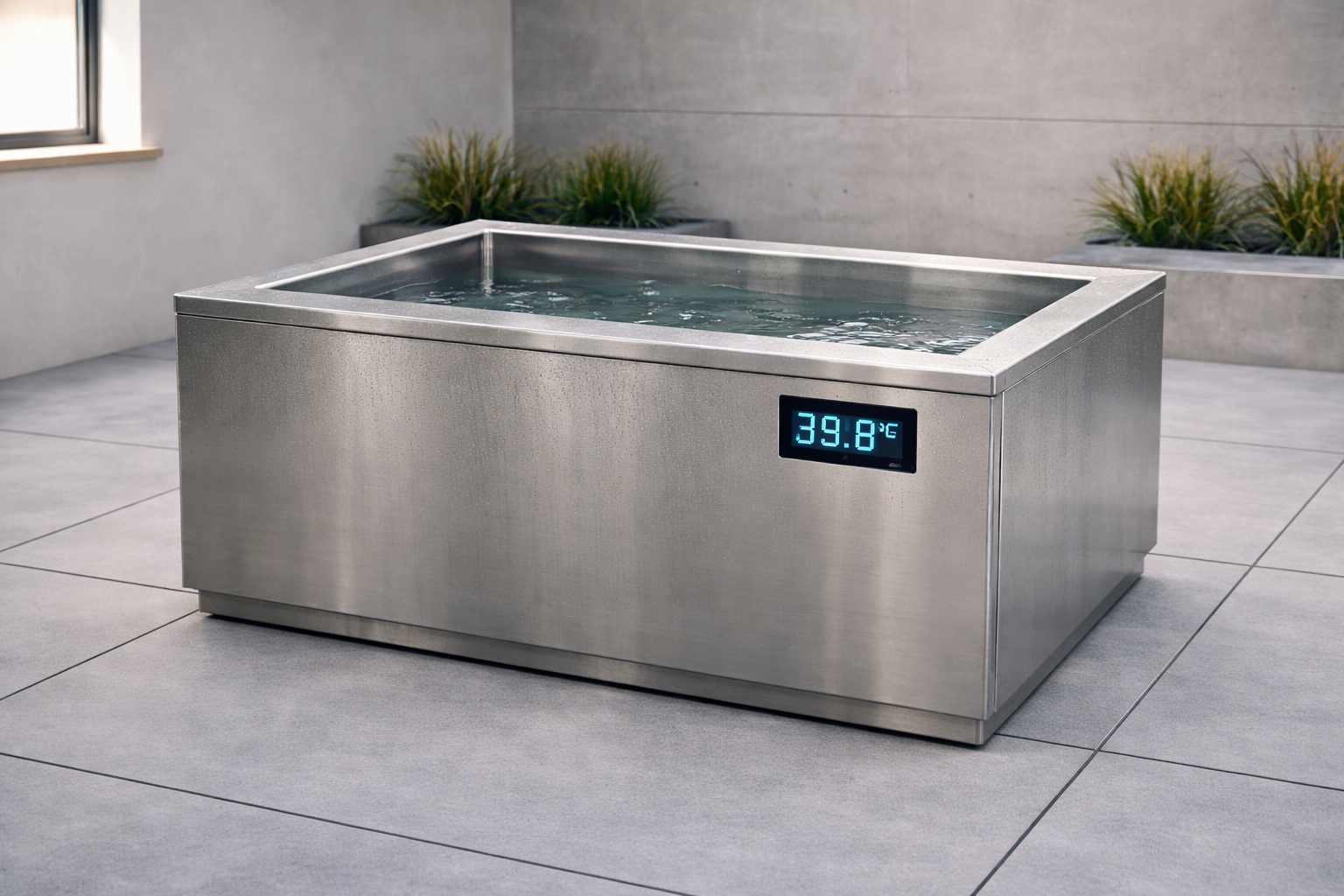
No. Integrated chiller systems maintain consistent water temperatures without manual ice management.
Most systems maintain temperatures as low as 39°F, depending on model and ambient conditions.
Initial cool-down time depends on water volume and starting temperature. Once set, the integrated chiller maintains stability automatically.
Yes, with proper ventilation and drainage planning.
Indoor installations require attention to humidity and water management.
Yes. Outdoor installation requires:
- Level foundation
- Electrical access
- Drainage considerations
- Weather protection when not in use
Cold Plunge Installation & Electrical
Most residential systems require either a standard 110V outlet or 220V outlet, depending on model.
Final electrical specifications are confirmed prior to shipment.
Most systems are self-contained and do not require permanent plumbing.
You will need access to a water source for filling and drainage for periodic water changes.
Cold Plunge Maintenance
Routine maintenance includes:
- Filtration use
- Periodic water replacement
- Sanitizer or ozone system (if included)
- Keeping the tub covered when not in use
Depending on usage and sanitation system, many users replace water every 1–4 weeks.
Under some circumstances, yes. Please see our return policy
Need Help? Frequently asked questions
Contrast Therapy FAQs
Contrast therapy alternates between heat exposure (sauna) and cold immersion (cold plunge).
The shift between hot and cold stimulates circulation and supports recovery protocols commonly used in athletic and performance environments.
Heat exposure causes blood vessels to dilate.
Cold exposure causes them to constrict.
Alternating between the two creates a circulatory pumping effect.
Contrast therapy is commonly incorporated into routines such as:
- Post-training recovery sessions after intense workouts or competition
- Morning cold exposure practices to start the day with alertness and focus
- Wind-down routines using heat followed by cold to transition into rest
- Athletic maintenance routines alternating hot and cold immersion
- Structured wellness practices for stress management and mental discipline
Individual results vary. The information presented is for general wellness and educational purposes only. Statements regarding these products have not been evaluated by the Food and Drug Administration. These products are not intended to diagnose, treat, cure, or prevent any disease. Consult a qualified healthcare provider before beginning any new wellness routine, especially if you are pregnant, nursing, or have a pre-existing medical condition.
A common protocol:
- Sauna: 10–20 minutes
- Cold plunge: 1–3 minutes
- Rest: 5 minutes
Repeat 2–4 rounds depending on tolerance.
Performance-focused protocols often end on cold.
Relaxation-focused sessions may end on heat.
Your goals determine sequence.
Many clients perform contrast therapy 2–4 times per week.
Typical ranges:
Sauna: 170–195°F (traditional)
Cold plunge: 39–50°F
Generally safe for healthy individuals.
Consult your physician if you have cardiovascular conditions, blood pressure concerns, pregnancy, or medical conditions affecting circulation.
For best results:
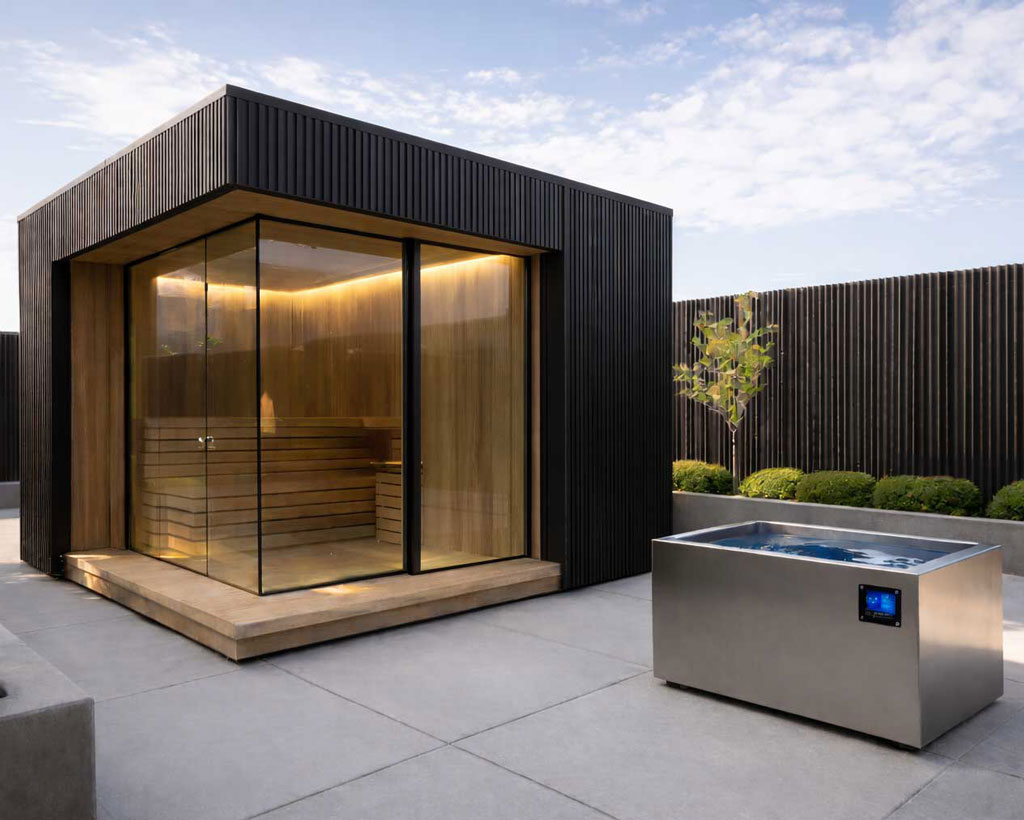
• Sauna positioned near cold plunge
• Efficient transition between heat and cold
• Proper electrical planning
• Adequate drainage and ventilation
Many clients install systems side-by-side for seamless flow.