
How to Choose a Cold Plunge for Home Use
I
f you are researching cold plunges for home use, you are probably past the basics. You know what contrast therapy is. You have watched enough content to understand the protocol. What you are trying to figure out now is which system is actually worth buying, and whether the one you are looking at will still be doing its job three years from now.
This guide is built around that question.
The Most Important Decision You Will Make Is the Type of System
There are three fundamentally different cold plunge products on the market right now, and they are not interchangeable. Getting clear on which one you actually need before you look at price or aesthetics will save you a significant amount of time and money.
Ice baths are a protocol, not a product.
A stock tank or an inflatable tub with bags of ice works. Athletes have used this approach for decades. The problem is the operational reality of daily use. You are buying, hauling, and dumping 20 to 40 pounds of ice per session. Temperature is imprecise and rises throughout your plunge as the ice melts. At current prices, daily ice use runs $240 to $450 per month. That math compounds fast, and the friction is real. People who commit to cold exposure as a daily practice consistently move away from ice and toward a chiller system within the first few months.
Chiller-based systems are what most serious buyers actually want.
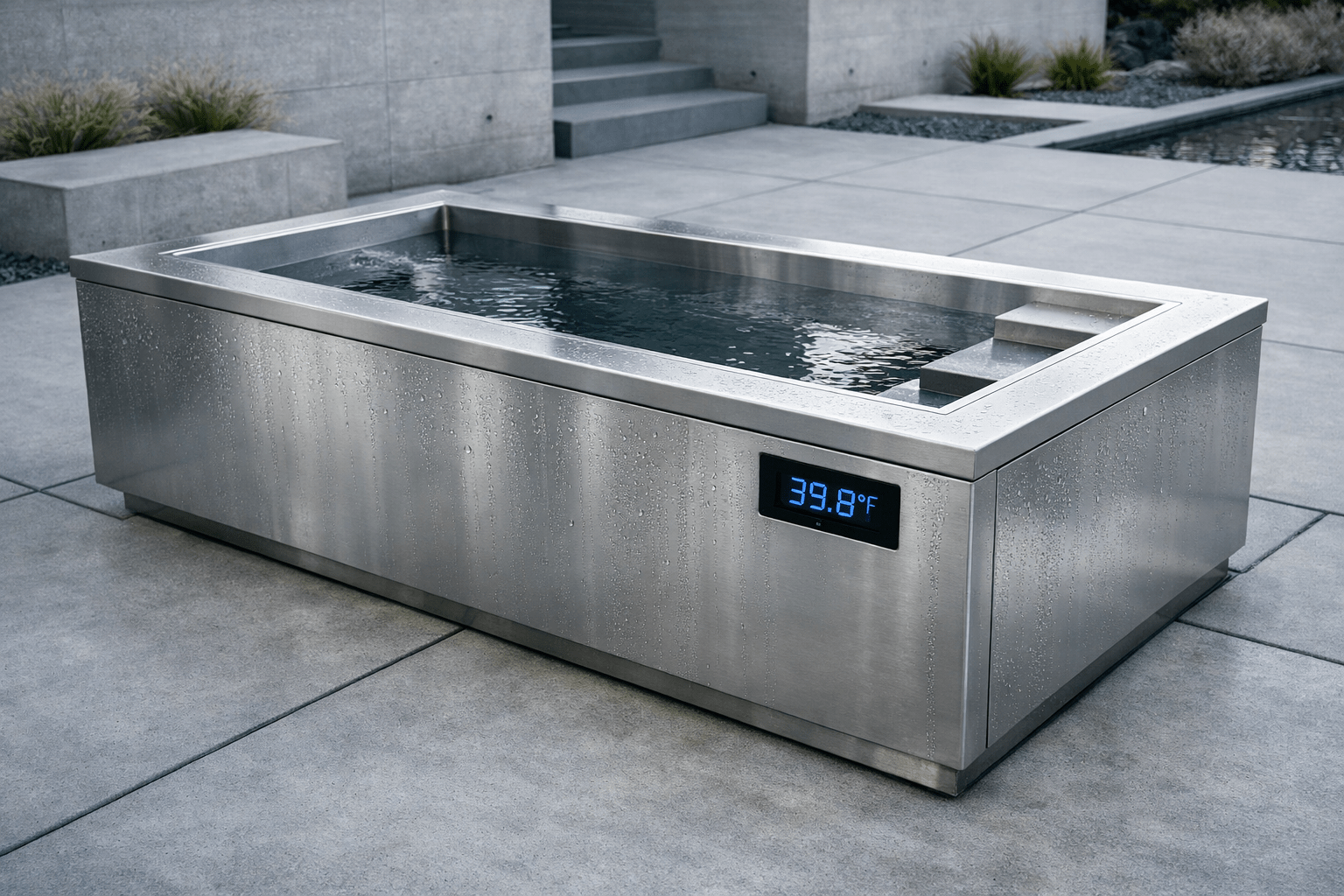
A chiller is a refrigeration unit connected to your plunge vessel. It maintains a set temperature without ice, filters the water continuously, and holds that temperature consistently from session to session. You set it to 50 degrees Fahrenheit and it stays at 50 degrees Fahrenheit. You set it to 39 and it holds 39. The session is the same every time. Electricity cost runs $30 to $60 per month for a well-insulated unit. By month 18 of daily use, a quality chiller system has paid for itself against what you would have spent on ice.
Passive cooling systems sit in the middle and satisfy neither use case well.
Some products on the market use cooling coils rather than active refrigeration. They look like chiller systems and are often marketed alongside them. The distinction matters. A cooling coil system wraps refrigerant around the vessel rather than actively circulating and chilling water through a proper refrigeration circuit. Cooling rate is slower, minimum achievable temperature is often higher, and performance in warm ambient conditions is significantly limited. If a brand is vague about how their chiller actually works, that is worth pressing on before you buy.
What to Actually Look For
The compressor is the spec that determines long-term reliability.
The compressor is the refrigeration engine inside the chiller unit. It is the most expensive component to replace and the most likely to fail in a budget system. Most brands do not volunteer this information, which is itself informative. The manufacturers that show up in quality residential cold plunge systems are Danfoss, Embraco, and Copeland. All three are established, their parts are available, and their failure rates are measurably lower than the no-name alternatives used in lower-priced units. If a brand cannot tell you who makes the compressor in their system, treat that as your answer.
Minimum achievable temperature tells you what you are actually buying.
The best residential chiller systems reach 37 to 39 degrees Fahrenheit. Quality mid-range systems hit 45 degrees consistently. Budget systems often cap at 50 degrees, which is cold enough for casual use but not where most serious cold exposure protocols operate. The more important question is minimum achievable temperature under real operating conditions, not lab conditions. Ask specifically: at what ambient temperature was that spec tested, and at what water volume. A chiller rated for 45 degrees in a 65-degree garage may struggle to hit 55 degrees in a 95-degree Arizona backyard.
Vessel material affects performance, durability, and daily experience.
Stainless steel is the premium standard. 304 grade is appropriate for most indoor and outdoor installs. 316 marine-grade stainless is required for two specific situations: outdoor installs in coastal environments where salt air accelerates corrosion, and systems running salt-based sanitation. Using salt chlorination in a 304 tub will corrode the interior over time. That distinction almost never appears in product listings, which is a problem. Rotomolded polyethylene is the other serious option. It is durable, well-insulated, UV-resistant, lighter than stainless, and used in a number of quality mid-market systems. Acrylic and fiberglass vessels are common in spa-style systems and perform adequately for most residential buyers.
Filtration is what determines the ownership experience.
Without proper filtration, a cold plunge requires a full water change every one to two weeks. That is 150 to 300 gallons of water drained and refilled, then three to six hours of chiller run time to bring the fresh fill back to temperature. Quality systems with proper filtration, including UV sanitation or ozone treatment, extend that interval to three to six months. The filtration components that matter: a circulation pump with a turnover rate of at least two to three times per hour, a quality cartridge or sand filter, and ideally UV or ozone sanitation to reduce or eliminate chemical dependency. This is the spec that separates a daily practice from a maintenance burden, and it is almost never the headline feature in any product listing.
Insulation determines your electricity cost and chiller longevity.
A well-insulated cold plunge maintains temperature with the chiller running infrequently, which means lower electricity costs and less wear on the compressor over time. A poorly insulated unit runs the chiller almost continuously to fight heat gain from the environment. The specifications to look for are foam-filled double-wall construction on the vessel and a tight-sealing insulated lid or cover. The lid is the most underrated component in the category. Evaporation and heat gain through an unsealed top can increase electricity costs significantly, particularly in warm climates.
What to Avoid
The single biggest mistake buyers make is choosing on aesthetics and price before establishing the underlying specs. A cold plunge tub that photographs well and arrives at a low price point can still use an underpowered compressor, a minimal filtration system, and thin vessel walls with no real insulation. The operational reality of that system is very different from what the product page suggests, and it shows up within the first few months of use.
The three questions worth asking any brand before you buy: who manufactures the compressor, what is the minimum achievable water temperature under real operating conditions in your climate, and what is the recommended water change interval with standard maintenance. If any of those three questions produce vague answers or deflection, you have what you need to know.
Brands that cannot answer component-level questions about their own product are telling you something about how the product was built. That matters more at year three than it does at point of purchase.
How Installation Affects Which System Makes Sense
Electrical requirements are straightforward but non-negotiable.
Most quality chiller-based cold plunges require a dedicated 240V circuit, typically 15 to 30 amps depending on the chiller size. Lower-powered units sometimes run on 120V, but these are generally insufficient for reaching serious target temperatures in warm ambient conditions. If your planned install location is outdoors in a warm climate and you want to reach below 45 degrees reliably, 240V is the practical requirement. Confirm panel capacity before you order. Adding a cold plunge circuit is usually straightforward, but if your panel is at capacity, that is a conversation to have with an electrician before the system arrives.
Drainage is the question most people skip and then regret.
Draining a cold plunge means moving 150 to 300 gallons of water every few months. For outdoor installs, gravity drain to a yard or storm drain is typically manageable. For indoor installs, you need a floor drain, a laundry standpipe, or a pump system to move water to a drain point. This is frequently the most expensive and complicated part of an indoor cold plunge installation, and it is almost never mentioned in product listings. If you are planning an indoor install in a finished basement or dedicated room, establish your drain path before you settle on a vessel size or location.
Proximity to the sauna matters more than most buyers account for.
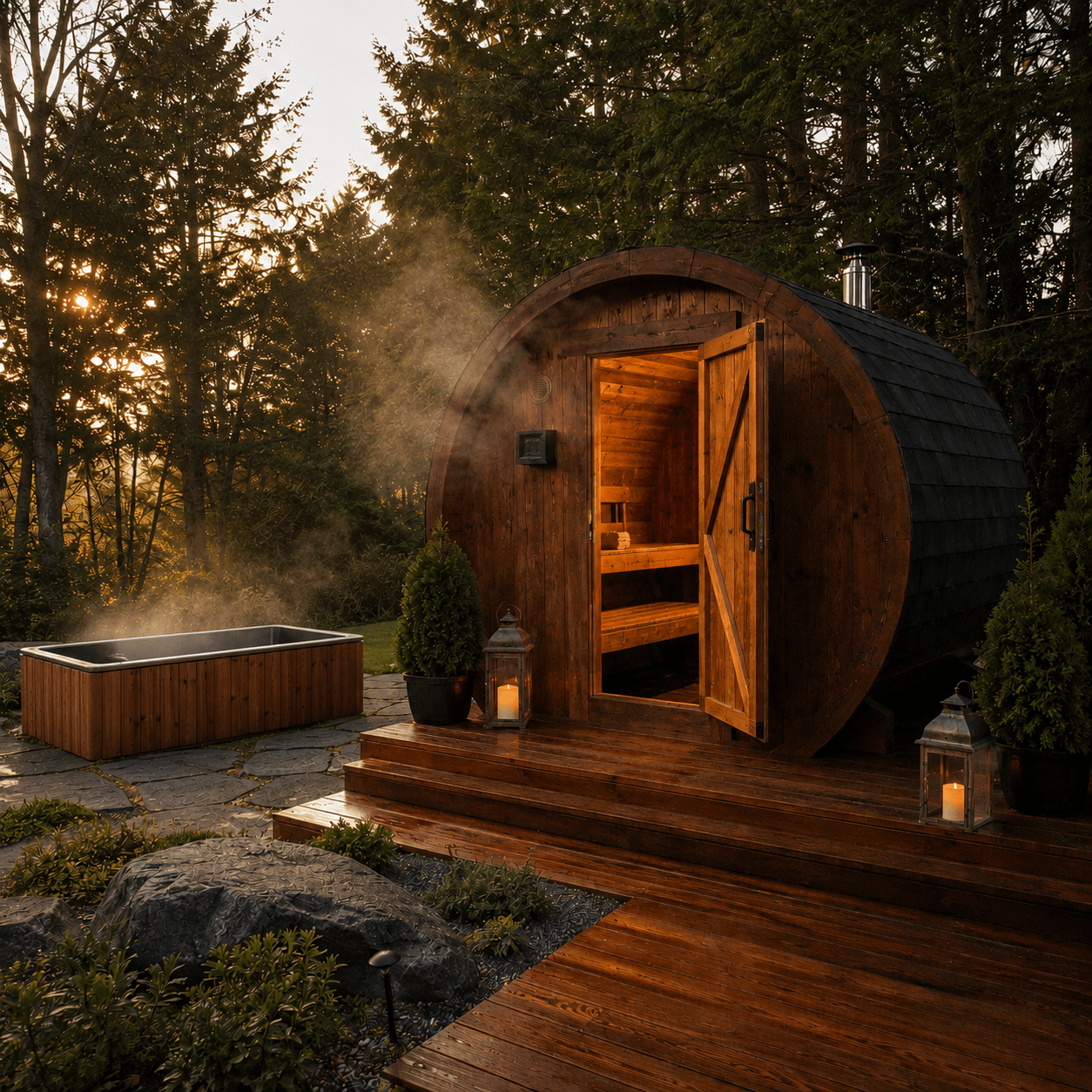
If you are installing a cold plunge as part of a contrast therapy setup, the distance between the two units affects the quality of every session you ever do. The physiological value of contrast therapy comes from the transition: stepping from high heat into cold water within seconds. Every step you take between the sauna door and the plunge edge is heat dissipating and the response weakening. The ideal setup puts both units within five to ten steps of each other on a flat surface. If your layout requires more than that, it is worth rethinking before you install rather than after.
The Question Worth Asking Before You Buy
The best cold plunge for home use is not the one with the most features. It is the one that fits how you actually intend to use it. How often. At what temperature. Indoors or outdoors. In what climate. With what level of maintenance you will realistically commit to.
Those are the questions worth sitting with before you decide. If you want to talk through the specifics for your situation, call us at 760.840.5141 or email support@forgerecoverygroup.com.
Forge Recovery Group is a curated online retailer specializing in premium sauna, cold plunge, and contrast therapy systems for residential buyers. Everything in our store earns its place.