
Article: Finnish Sauna vs Cedar Barrel Sauna: What Is the Difference?
Finnish Sauna vs Cedar Barrel Sauna: What Is the Difference?
You are comparing two different things. That is not obvious at first, and most articles do not explain it clearly. A Finnish sauna describes a bathing experience. A cedar barrel sauna describes a shape and a material. You can actually have both at the same time. But once you understand the real difference, the buying decision gets a lot simpler.
What Makes a Sauna Finnish
Finnish sauna is not a style of building. It is a method of bathing. The defining element is löyly, pronounced roughly "low-loo," which is the burst of steam created when water is poured over hot stones on a sauna heater. That steam does not just add humidity. It changes the felt temperature in the room and creates the full-body heat response that Finnish sauna culture is built around.
The other defining feature of an authentic Finnish sauna is tiered benches. You sit high to get maximum heat. You drop to a lower bench when you need to cool down slightly. Your whole body stays in the heat zone. Feet included.
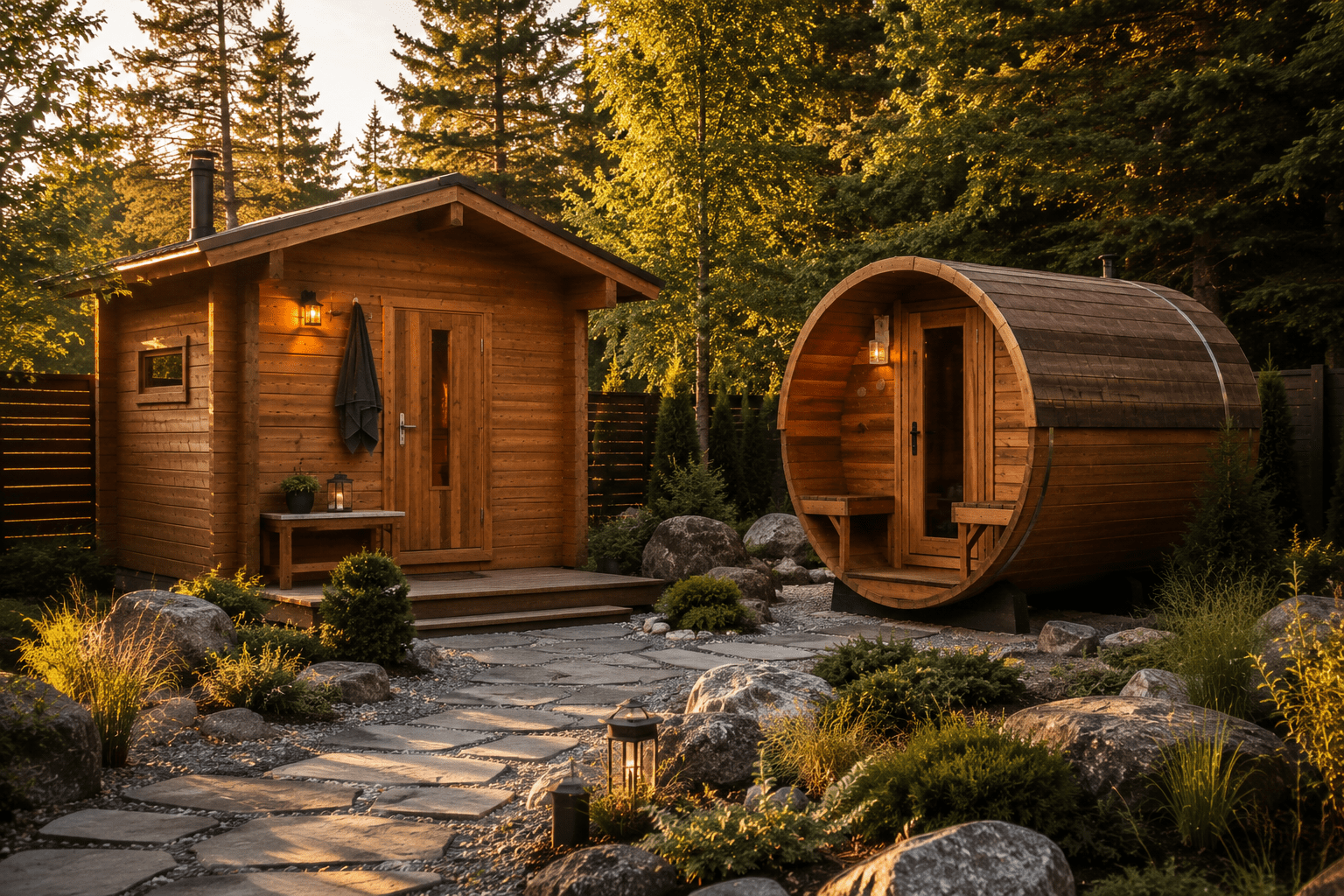
A Finnish sauna can be built in almost any shape: a room inside your home, an outdoor cabin, or yes, a barrel. The shape is secondary. The experience comes first.
What Makes a Sauna a Cedar Barrel
A cedar barrel sauna is defined by two things: cylindrical construction and western red cedar wood. The barrel shape is not traditional in Finland. It became popular in North America because it looks striking in a backyard, ships as a kit, assembles without a contractor, and heats up faster than a larger room sauna.
Western red cedar is chosen for durability and rot resistance outdoors. It also has a strong, distinctive aroma that a lot of buyers love. Finnish purists typically use Nordic spruce or aspen, which have lower thermal conductivity and a much more subtle scent. Neither is wrong. They are just different priorities.
The Cold Feet Problem Nobody Talks About
This is the most important practical difference between the two, and most comparison articles skip it entirely.
In Finnish sauna tradition, there is a basic rule: your feet should be elevated above the top of the heater stones. This creates uniform heat from head to toe. It is called the law of löyly, and it is why traditional Finnish saunas have benches at two or three different heights.
A barrel sauna has curved walls. There is no physical room for an upper bench. You sit on a single low bench with your feet near the floor. Hot air rises. The result is a hot head and noticeably cooler feet. Some people never notice or do not care. Serious sauna users consider it a significant compromise.
If you want the authentic Finnish heat experience, this matters. If you want a hot, relaxing outdoor sauna that heats up fast and looks great, it probably does not.
Heat, Speed, and Efficiency
Barrel saunas heat up faster. The cylindrical shape reduces interior air volume by roughly 20 to 30 percent compared to a room sauna of similar capacity. Less air to heat means you are ready to use it sooner, typically in 30 to 45 minutes depending on your heater.
Traditional Finnish cabin saunas are slower to heat but hold temperature better. Thick insulated walls, a vapor barrier, and a proper roof mean the heat stays where you put it. In cold climates especially, the insulation difference is significant. Barrel saunas rely on wood expansion to stay watertight and can lose heat more quickly in extreme temperatures.
Durability and Weather
A traditional outdoor Finnish sauna is built like a small structure: insulated walls, a real roof, a vapor barrier. It handles weather the way a well-built outdoor building does.
A barrel sauna relies on the natural expansion and contraction of its wood staves to stay sealed. The steel bands holding the barrel together need periodic tightening. Without a roof kit, the top of the barrel is exposed to rain and snow. In wet climates or heavy snow regions, longevity becomes a real consideration. Western red cedar handles moisture better than most woods, but it is not maintenance-free.
If you are in a climate with harsh winters or heavy rainfall, this is worth factoring into your decision before you buy.
Cost Differences
Cedar barrel saunas typically run from around $7,000 to $14,000+ depending on size and heater. Traditional Finnish cabin saunas start around $9,000 and go up from there based on size, materials, and configuration. The price gap reflects the difference in construction complexity, insulation, and materials.
At the upper end of both categories, you are looking at products that are genuinely premium. The difference is not just aesthetics. It is in the bathing experience, the build quality, and how the structure holds up over time.
Which One Is Actually Right for You
Choose a traditional Finnish sauna if you want the authentic bathing experience: tiered benches, proper löyly, uniform head-to-toe heat, and a structure built to last for decades. This is the right choice if sauna is a serious part of your recovery routine and you are not willing to compromise on how it actually feels.
Choose a cedar barrel sauna if you want an outdoor sauna with a strong visual presence, faster heat-up time, simpler installation, and a lower entry price. It is a legitimate sauna. It just makes different tradeoffs.
The buyers we work with at Forge Recovery Group tend to fall into two clear camps. One group wants the real Finnish experience and is willing to invest in it properly. The other group has a specific backyard situation, wants something that looks exceptional, and values the speed and simplicity of a barrel setup. Both are valid. The mistake is buying a barrel sauna expecting a Finnish sauna experience, or spending premium money on a cabin sauna when a barrel would have done exactly what you needed.
A Note on Finnish Barrel Saunas
Yes, they exist. A barrel sauna can be configured with a quality Finnish heater, hot stones, and a proper löyly setup. Some manufacturers build barrel saunas specifically designed to address the bench height limitation. If you want the barrel aesthetic and the Finnish experience, that category is worth looking at. Just verify the bench configuration before you buy. Not all barrel saunas are set up the same way.
If you have questions about which setup is the right fit for your space and how you plan to use it, reach out directly. That conversation is worth having before you spend $6,000 to $15,000 on something that sits in your backyard for the next 20 years.